

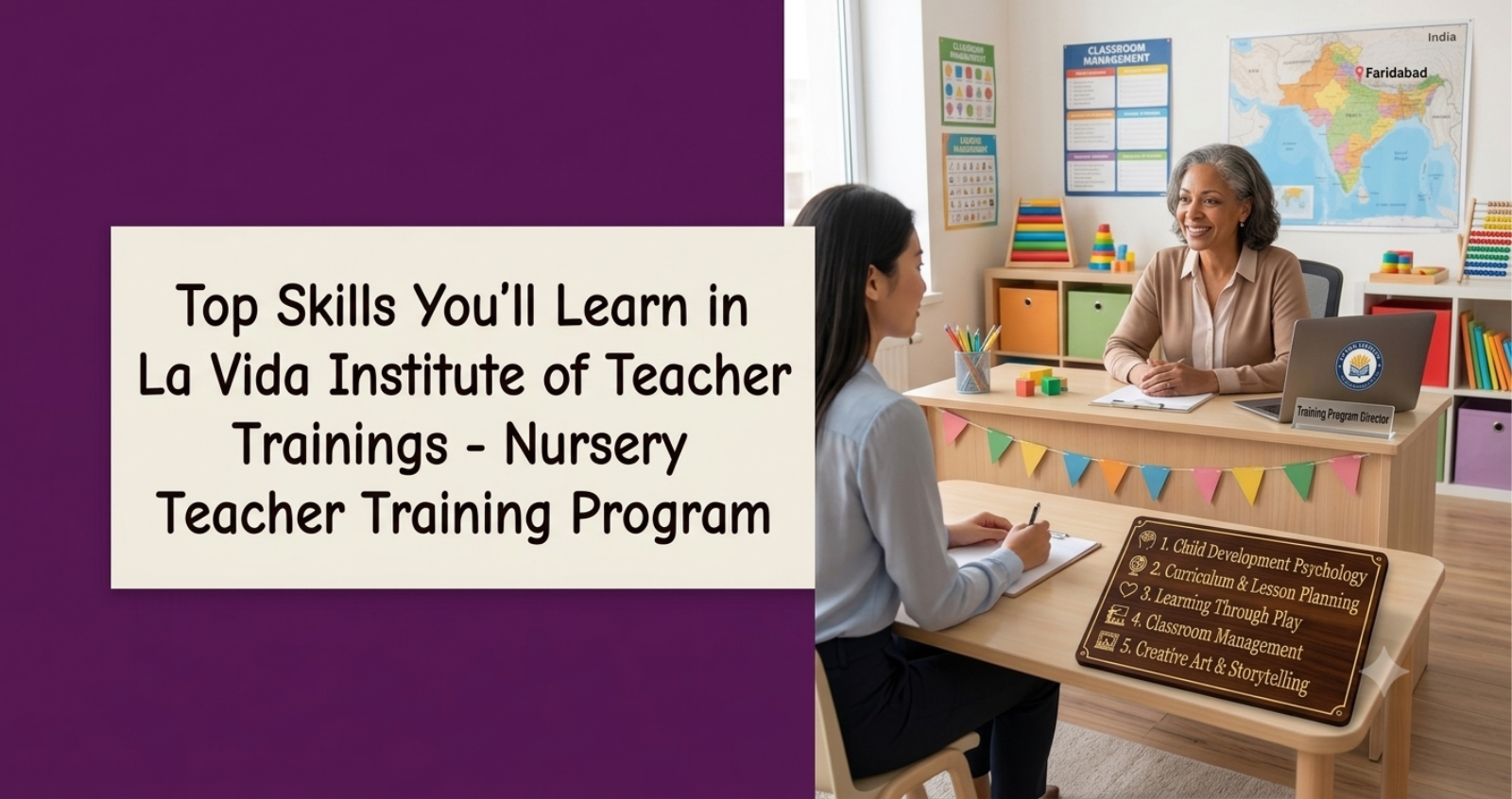
Teaching young children calls for patience, creativity, communication and an understanding of how children learn in their years. A nursery teacher training program assists aspiring educators in developing the professional skills needed to work with preschool and nursery?age children.
Early childhood education differs from teaching students. Young children learn through play, activities, stories, music, movement, exploration and interaction. Therefore nursery teacher training equips teachers with the knowledge to create a classroom while supporting children’s emotional, social and learning needs.
For students considering nursery teacher training faridabad understanding the skills covered in a training programme can help them decide whether this career path matches their interests and goals.
1. Understanding Child Development
Managing a classroom of children requires planning, patience and consistency. A teacher needs to maintain an environment while keeping children engaged in activities.
Nursery teacher training programmes introduce techniques for organising classroom routines managing transitions between activities encouraging behaviour and maintaining discipline in an age?appropriate way.
The goal is not simply to control the classroom but to create an environment where children feel participating and learning.
2. Classroom Management Skills
Managing a classroom of children requires planning, patience and consistency. A teacher needs to maintain an environment while keeping children engaged in activities.
Nursery teacher training programmes introduce techniques for organising classroom routines managing transitions between activities encouraging behaviour and maintaining discipline in an age?appropriate way.
The goal is not simply to control the classroom but to create an environment where children feel participating and learning.
3. Creative Teaching Techniques
Training helps aspiring educators develop verbal and non-verbal communication skills. They learn how tone of voice, facial expressions, gestures, storytelling, and questions can influence classroom interaction.Young children generally respond well to interactive and learning methods. Nursery teacher training helps students learn how to use activities such as storytelling, drawing, colouring, music, role play, games, rhymes and craft work.
These activities can make classroom learning engaging and help children develop different skills through practical experiences. Future teachers also learn how to adapt activities according to children’s ages and abilities.
4. Communication With Young Children
Effective communication is essential when working with preschool children. Teachers need to explain instructions in simple language and listen carefully to children.
Training helps aspiring educators develop verbal and non-verbal communication skills. They learn how tone of voice, facial expressions, gestures, storytelling, and questions can influence classroom interaction.
Good communication can also help teachers build trust and encourage children to express their thoughts and feelings.
5. Lesson and Activity Planning
A well?organised classroom requires preparation. Nursery teacher training introduces students to the basics of planning lessons and age?appropriate activities. Trainees learn how to decide learning objectives select materials organise activities and structure a daily classroom routine.
Activity planning can include subjects and areas such as language development, numbers, general awareness, motor skills, creativity and social interaction.
6. Montessori-Based Teaching Approaches
Montessori education places importance on hands?on learning, independence, exploration and practical activities. Students interested in this approach can learn how classroom materials and activities can encourage children to participate in their own learning.
A programme offering Montessori teacher training faridabad can introduce educators to Montessori principles, classroom practices learning materials and ways of supporting children through structured yet exploratory activities. These skills can be particularly useful for teachers in working in Montessori?oriented preschool environments.
7. Observation and Assessment
Observation is an important part of early childhood education. Young children may not always communicate their abilities or difficulties directly, so teachers need to observe their participation, behaviour, communication, and progress.
Teacher training helps students understand basic observation and assessment methods. Instead of focusing only on formal tests, early educators can use classroom activities and everyday interactions to understand a child's development.These observations can also help teachers plan activities according to individual learning needs.
8. Storytelling and Activity-Based Learning
Storytelling is a useful classroom technique for introducing concepts and encouraging children to listen, imagine, and communicate.Trainees can learn how to select age-appropriate stories and present them using expressions, voice modulation, pictures, props, and simple questions.
Activity-based learning is another important area. Games, puzzles, art activities, music, movement, and practical exercises can help children learn concepts while remaining actively involved.
9. Supporting Social and Emotional Development
Early educators play an important role in helping children develop social skills. Teacher training introduces students to ways of encouraging sharing, cooperation, communication, turn-taking, and respectful interaction.
Teachers also learn the importance of creating a supportive classroom where children can express their emotions appropriately. Understanding these aspects can help future educators respond calmly to common challenges such as separation anxiety, conflicts between children, or difficulty participating in group activities.
10. Professional Skills for Preschool Teaching
Along with classroom skills, a teacher training programme can help students develop professional habits such as planning, teamwork, communication with parents, maintaining classroom records, and following school procedures.
These skills can prepare trainees for different roles in early childhood education, including nursery teacher, preschool educator, classroom assistant, activity teacher, and other childcare-related positions.
Choosing the Right Teacher Training Programme
When selecting a course, students should consider the curriculum, practical training, teaching methodology, course duration, learning resources, and opportunities for hands-on experience.
A Teacher training institute in faridabad can be evaluated by understanding what subjects and practical components are included in its programme. Students should also ask whether the course provides opportunities to practise classroom activities and understand real preschool environments.
La Vida Institute of Teacher Training offers teacher training programmes designed for individuals interested in developing skills for early childhood education and preschool teaching.
Final Thoughts
A Nursery Teacher Training Program can help aspiring educators build a combination of teaching, communication, classroom management, creative, and child-development skills. These skills are useful because early childhood classrooms require teachers who can combine learning with play, interaction, creativity, and care.
For students interested in building a career in preschool education, choosing a course with both theoretical knowledge and practical learning can provide a strong foundation for working with young children.