

Choosing the daycare for your child is a big decision. Many things matter, like location, curriculum, safety and facilities. One important thing that often gets overlooked is the child-teacher ratio. This ratio affects how care, guidance and attention your child gets.
“A good child-teacher ratio helps teachers understand each childs needs.”
They can provide supervision and create a nurturing environment. This is where children feel exploring, learning and developing new skills.
For parents looking for a day care in Faridabad understanding child-teacher ratios is key. It helps you choose a preschool that focuses on quality care and individual attention.
What Is a Child-Teacher Ratio in Daycare?
A child-teacher ratio is the number of children assigned to one teacher or caregiver. It helps parents know how time and attention teachers can give to each child.
For example, A classroom with children per teacher allows educators to:
- respond quickly to children’s needs
- Provide guidance
- monitor children more effectively
- support emotional and social development
- create stronger connections with children
Why Child-Teacher Ratios Matter in Early Childhood Education
Early childhood is a stage. Children develop skills related to language, confidence, problem-solving and social interaction. Teachers play a role in supporting this growth. A lower child-teacher ratio helps educators focus on learning patterns. This allows teachers to identify children’s interests, strengths and areas where they may need support.
Every child learns in their own way, and having enough time with a teacher can make a significant difference in their overall development. With balanced child-teacher ratios, educators can observe each child's progress, encourage curiosity, and provide timely guidance whenever needed.
Children also feel more comfortable asking questions, participating in activities, and expressing their emotions when they know a trusted teacher is available to support them. This individual attention not only strengthens academic readiness but also helps build confidence, independence, communication skills, and positive social behaviour, creating a strong foundation for lifelong learning and overall well-being.
Some key benefits include:
Better Individual Attention
Every child learns at a different pace. Some children may need extra encouragement while others may quickly adapt to new activities. When teachers manage smaller groups, they can provide customized support based on each child’s development.
Improved Safety and Supervision
Young children are naturally curious and active. Proper supervision is essential during playtime, meals, outdoor activities, and transitions. A healthy ratio allows teachers to observe children closely and respond quickly whenever assistance is needed.
Stronger Teacher-Child Relationships
Children feel more confident when they develop a trusting relationship with their teachers. With more time for interaction, educators can create a caring atmosphere where children feel secure, valued, and encouraged to express themselves.
Child-Teacher Ratio vs Classroom Size: Understanding the Difference
Many parents confuse child-teacher ratio with classroom size. Both are different factors. A child-teacher ratio explains how many children one teacher is responsible for. Classroom size refers to the number of children in a learning space.
Child-Teacher Ratios by Age Group
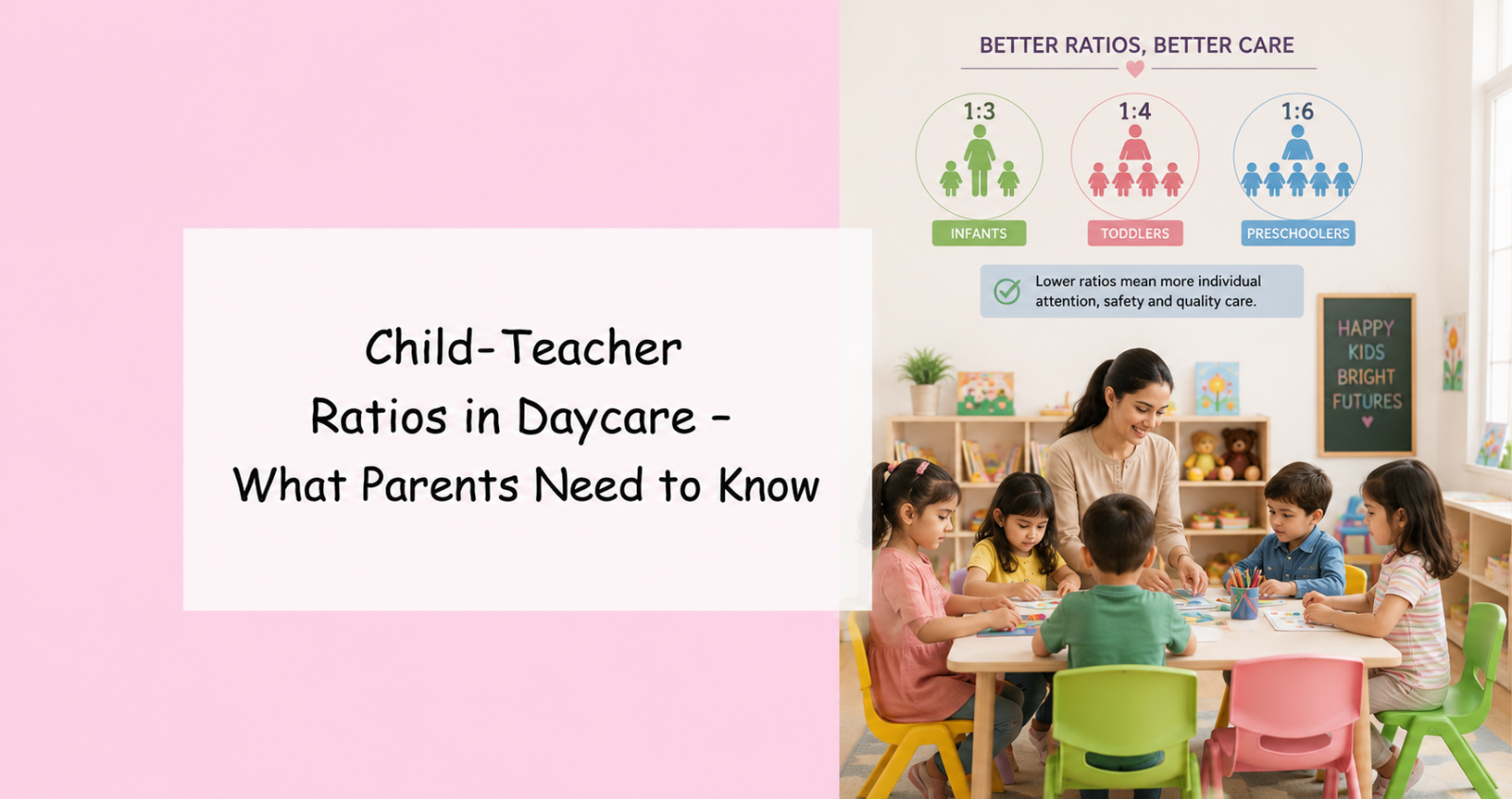
While the exact regulations may vary depending on state guidelines and the daycare's licensing requirements, early childhood education experts generally recommend the following child-teacher ratios:
Infants (0–12 months): 1 teacher for every 3–4 infants
Toddlers (1–2 years): 1 teacher for every 5–6 toddlers
Preschoolers (3–5 years): 1 teacher for every 8–10 children
These ratios help ensure that every child receives proper supervision, emotional support, and opportunities for meaningful learning throughout the day.
How Age Groups Affect Child-Teacher Ratios
Children’s needs change as they grow. Daycare ratios often depend on age groups.
Infants (0–12 Months)
Recommended Ratio: 1:3 or 1:4
Infants require care including feeding, diaper changes, comfort and close monitoring. They benefit from groups and more one-on-one attention.Infants (0–12 Months)
Toddlers (1-2 Years)
Recommended Ratio: 1:5 or 1:6
Toddlers are exploring independence. Learning through movement and interaction. Teachers need to provide guidance while ensuring their safety during activities.
Preschoolers
Preschoolers (3–5 Years)
Preschool children are developing communication skills, creativity and social abilities. They benefit from teachers who can support learning activities while encouraging independence.
How a Good Child-Teacher Ratio Supports Your Child’s Growth
A positive learning environment is not about activities and lessons. It is also about how attention and encouragement children receive from their teachers.
With ratios educators can:
- encourage curiosity through hands-on learning
- help children develop confidence
- support positive behavior
- guide children during social interactions
- provide meaningful feedback
What Parents Should Check Before Selecting a Daycare
Before enrolling your child parents should consider more than the facilities offered by a daycare. Understanding the teaching approach classroom environment and teacher availability can make a difference.
Parents can ask questions like:
- How many children are there in each classroom?
- How many teachers are present during daily activities?
- How does the daycare manage supervision during outdoor play and meals?
- How do teachers support individual learning needs?
For families looking for the best daycare in Faridabad, choosing a centre that maintains proper child-teacher ratios can ensure children receive the care, attention, and guidance they need during their formative years.
Why La Vida A Montessori Preschool Focuses on Individual Attention
At La Vida A Montessori Preschool we believe every child deserves a engaging and supportive learning environment. Our Montessori-based approach focuses on understanding each child’s personality learning style and developmental needs.
By maintaining a child- classroom environment and encouraging meaningful teacher-child interactions we help children build confidence, independence and essential life skills.
Conclusion
Child-teacher ratios are a factor that parents should consider when choosing a daycare program. They influence the quality of supervision, personal attention, emotional support and overall learning experience children receive every day.
A daycare with ratios creates opportunities, for stronger relationships, better communication and a more nurturing environment. By understanding the importance of these ratios parents can make choices and select a preschool that supports their child’s growth and development.